
The Moondog Masters - coming in 2027
A Moondog tradition unlike any other - where all balls will be played down and all shots counted
Jekyll Island Georgia
Date TBD
54 holes - individual stroke play
The Courses
GOLD TEES 5686 yards 116/67.2
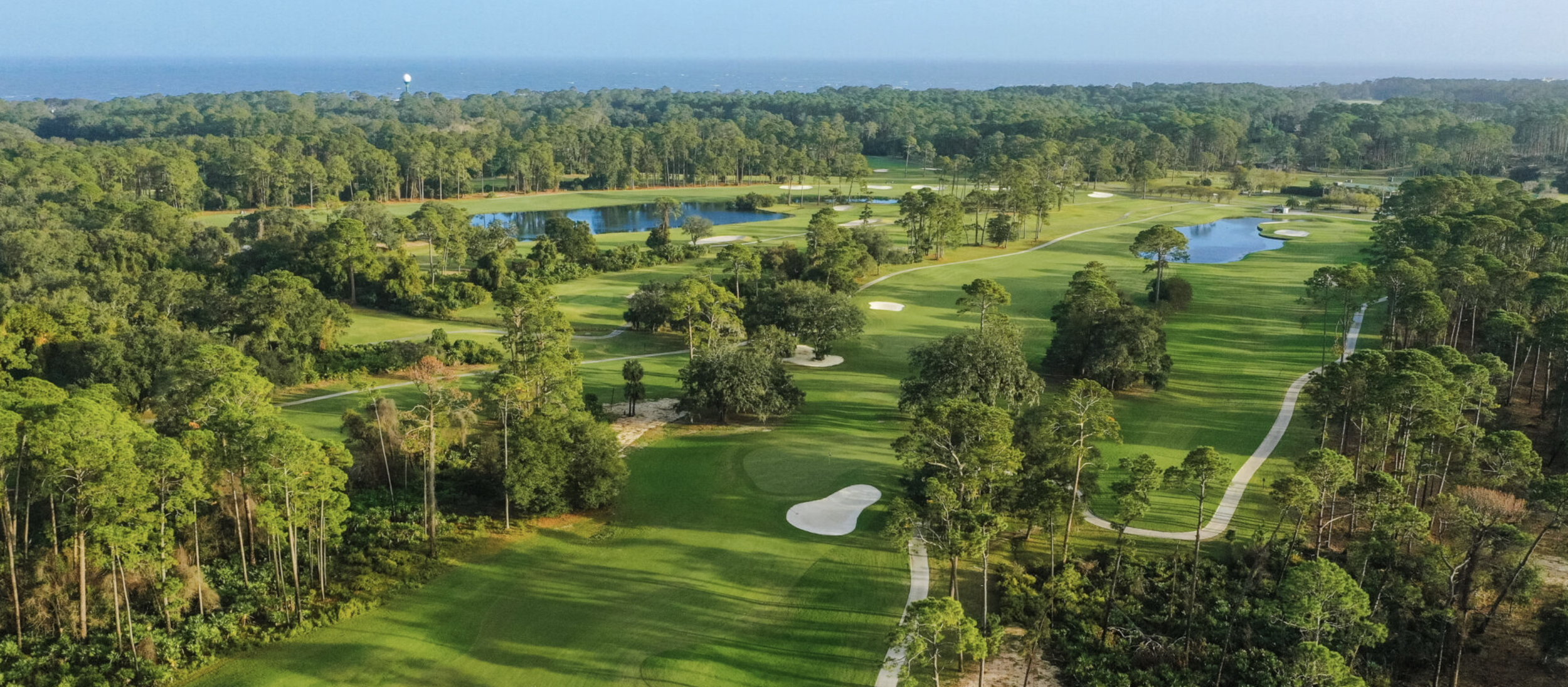
Originally built in 1968, redesigned in 2002, and renovated in 2024 with new tees, fairways, greens, and bunkers, Pine Lakes is the Island’s longest golf course, meandering through ocean forests and undisturbed marsh hammocks. Golfers and naturalists alike will find solace in this tranquil outdoor venue. Known as the Island’s family-oriented course, Pine Lakes was developed by designer Clyde Johnson to incorporate family-friendly tee boxes, making it one of the few courses in the nation that provides an even playing ground for adults and younger players.
PURPLE TEES 5080 yards 108/64.4
Constructed in 1975, Indian Mound is a masterpiece from course designer Joe Lee.
Known for displaying Lee’s signature fairway bunkers in precarious locations, this natural course displays the Island’s pristine beauty and woodlands. Though it is the shortest of Jekyll’s three 18-hole courses, Indian Mound offers plenty of challenges.
Its par 5s are more difficult than the modest yardage might suggest, and only one of the par 3 holes can be thought of as a soft touch. The course’s par 4 holes provide several scoring opportunities for golfers able to take advantage of the short shots into the greens.
GOLD TEES 5629 yards 112/66.2
History of Great Dunes
Originally designed by legendary golf course architect, Walter “Old Man” Travis, Great Dunes is one of the earliest examples of oceanfront golf along the Georgia coast—and notably, Travis’ final design. He passed away before the course officially opened in 1928, never seeing his vision fully complete.
Commissioned during Jekyll Island’s Club Era by the nation’s wealthiest and most prominent families, Travis created the best course money could buy, with sweeping dunes, ocean views, and challenging bunkers. Today, Great Dunes remains especially significant as one of the few Travis-designed courses open to the public, offering rare access to the work of one of golf’s early innovators.
Great Dunes also played a role in shaping the game itself. In the 1920s, the U.S. Golf Association conducted equipment testing on the island, including early trials of steel-shafted clubs and standardized golf balls. These innovations would ultimately redefine how the game is played.
Restored & Reopened
Now fully restored and reimagined as a unified 18-hole course, Great Dunes honors Travis’ original vision while delivering a modern coastal golf experience.
Led by architects Brian Ross (Ross Golf Design) and Jeffrey Stein (Stein Golf Design), the course thoughtfully restores remaining Travis-designed holes and integrates land from the former Oleander Course. The result is a cohesive layout that feels both historic and entirely new.
Set within a dynamic coastal landscape, Great Dunes takes golfers on a one-of-a-kind journey through the dunes, out to the ocean and back, in a wide-open, natural environment surrounded by a conservation-sensitive maritime forest.
Sustainability is central to the course’s success. Great Dunes is the only golf course in Georgia to utilize a brackish-water irrigation system, reducing reliance on freshwater while supporting healthy, resilient turf suited to the coastal climate.
Reopened in Fall 2025, Great Dunes offers a rare opportunity to play a course rooted in history, shaped by nature, and designed for the future of golf.
A venue of both social and historical significance, the Grand Dining Room has welcomed titans of industry, stars of the stage, and resort guests for over a century. Beautifully restored in the Victorian mode, the Grand Dining Room boasts iconic columns and gleaming white woodwork. The quintessential Southern fine dining experience is a culinary and visual delight and a staple of any Jekyll Island vacation. The Grand Dining Room serves breakfast daily, as well as brunch on Sunday.